Pioneering advanced photonics probes for health and the environment.

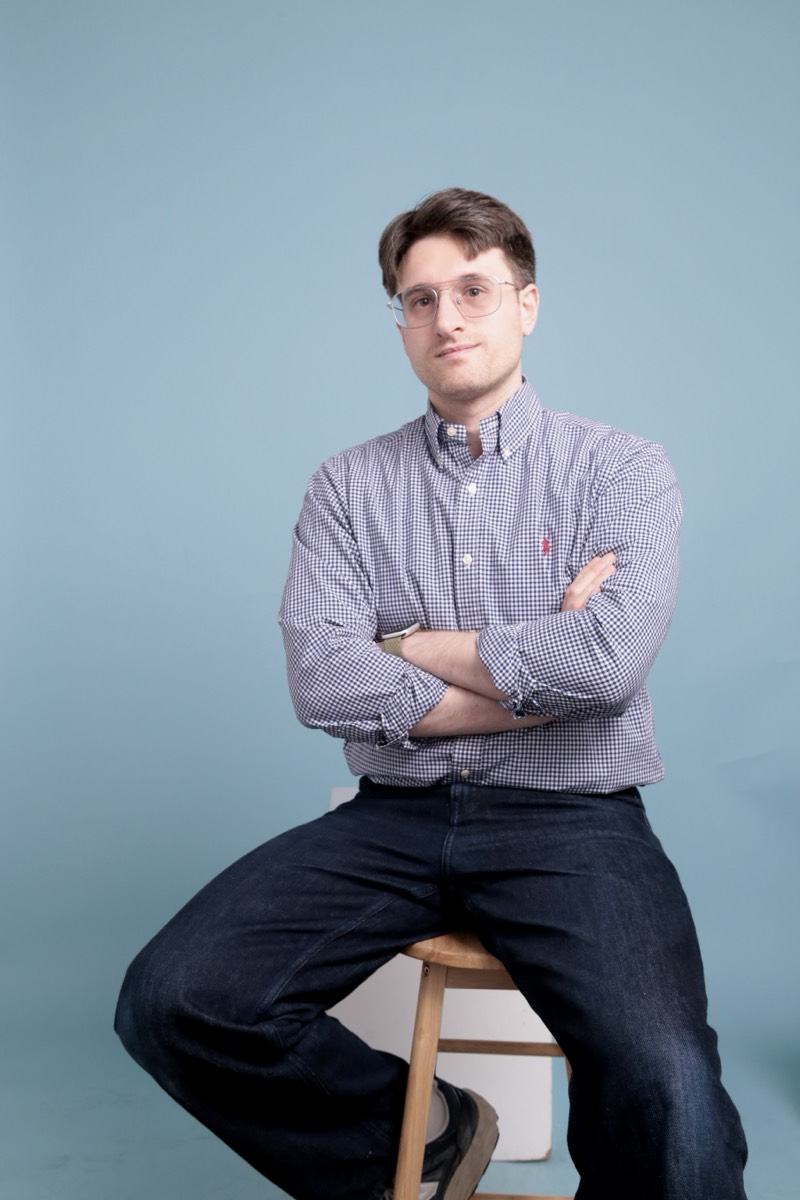
Engineer from the Institut d'Optique Graduate School, Guillaume got his PhD from Ecole Polytechnique. Working at the crossroads between fundamental optics and biology, he was amongst the 2021 recipients of Institut Polytechnique de Paris' « Best Thesis Award ».
He began his career in South Korea, where he developed new optical interferometry instruments for the study of proteins. As an Associate Professor at the Institut Polytechnique de Paris, he now combines Machine Learning, statistical optics, and computational physics to develop photonic probes for environmental, health, and biological applications.
Recent laureate of an international science communication competition organized by Nature and book author at Springer Nature, he actively works in science communication and the visual arts.
Experimental optics for the RIPPLE Pre-maturation project.

Optics and Deep-Learning for lensless microscopy.

Deep-Learning for computational microscopy.

Optics for lensless microscopy. Passionate about birds and Japanese culture. Fan of Pokémon (and capybaras), and currently reading 1984.

Deep learning for FPM. Favourite language: Python. Favourite sound: electronic music, and the GPU finally starting training


Compact and ultra-sensitive cavity enhanced photonic probe.
Large field-of-view and high-resolution computational imaging.
Computational imaging for the reconstruction of complex objects.
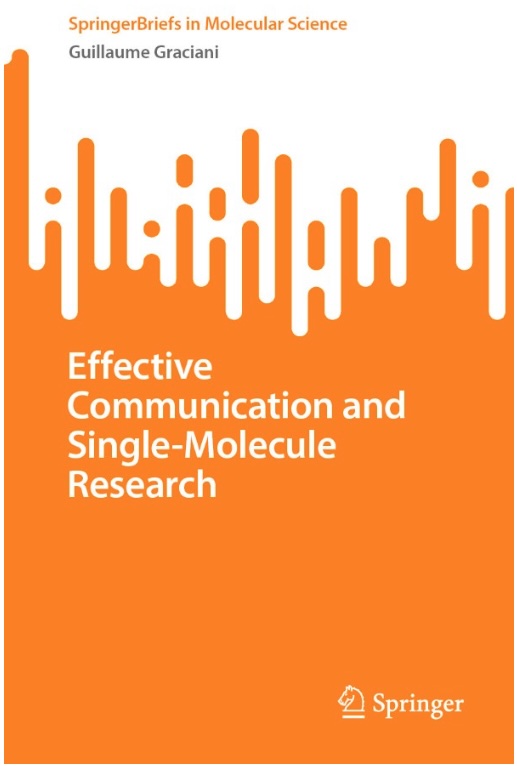
This Brief explores the vital role of science communication in today's world while demystifying how research is actually conducted in modern labs today. Divided into two parts, it begins by highlighting the need for scientists to share their work with the public through accessible and nuanced communication. The first part of the book covers key concepts such as the democratization of science, the benefits of effective communication for scientists, and strategies for educators to engage diverse audiences. Readers will discover how digital amnesia affects science communication and how, rather than facts, it is the scientific method itself that needs to be taught.
The second part dives into the author's cutting-edge research, offering a behind-the-scenes look at the experimental setups and methodologies that drive scientific innovation at the frontiers of photonics and biology. From building setups with lasers and coding image processing algorithms to researching innovative drugs with machine learning, the author shares the actual process through which scientific discoveries are made in labs today.
Building on an award-winning 2024 Science in Shorts mediation content, this book is an essential resource for researchers, educators, and science communicators who seek to bridge the gap between the scientific community and the public. It is also invaluable for students and professionals in the fields of photonics and biology, providing a comprehensive understanding of the latest research techniques and their real-world applications.
Get the book →
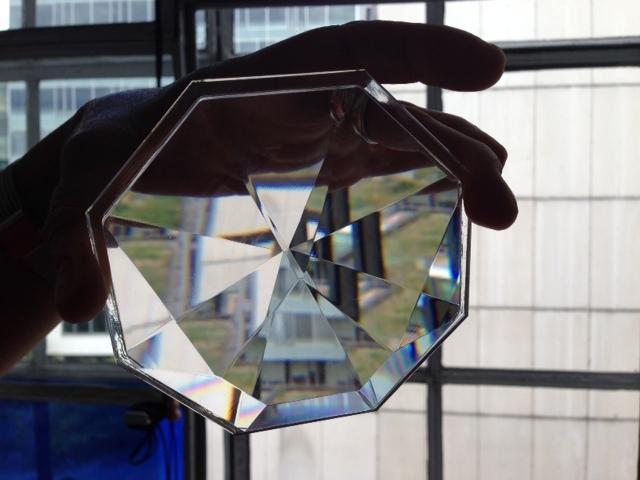
Optical designer for visual artists: feasibility study and design of optical systems for modern art projects.
Collaborated with visual artists Elliot Woods, Véronique Joumard, and Cécile Pitois.
For general audiences: Behind the scenes of modern science. A lecture series unpacking how research really works: how labs are funded, how peer review and publication actually functions, what scientific consensus means, and why the scientific method remains our most reliable tool for navigating an uncertain world. Designed to demystify science without dumbing it down.
For organizations: Thinking like a scientist: making decisions under uncertainty. A keynote drawing on probability paradoxes, quantum physics, and the long history of breakthrough experiments to show how science treats uncertainty not as a problem to eliminate, but as raw material for discovery and innovation. Practical takeaways for leaders, R&D teams, and decision-makers facing complex strategic choices.
Why and how scientists should communicate their work. Based on my book, this training program helps researchers, PhD students and postdocs articulate their work clearly across audiences, from peers to policymakers to the general public. We cover why scientific communication matters today more than ever, and the practical methods to do it well without compromising rigor.